
Understanding IBS Pain vs SIBO Bloating: How to Tell the Difference and Regain Control of Your Gut Health
IBS Pain vs SIBO Bloating: 5 Crucial Differences You Must Know
Living with chronic digestive issues can feel like an endless cycle of discomfort, confusion, and frustration. When your gut acts up, it is easy to lump all your symptoms under one broad umbrella. For years, millions of individuals experiencing chronic gastrointestinal distress have been given a general diagnosis of Irritable Bowel Syndrome (IBS). However, modern gastroenterology has revealed that many people labeled with IBS are actually suffering from a specific, measurable condition called Small Intestinal Bacterial Overgrowth (SIBO).
If you are trying to understand your chronic GI discomfort, evaluating IBS pain vs SIBO bloating is one of the most important steps you can take toward finding lasting relief. While their symptoms overlap dramatically, these two conditions arise from entirely different mechanisms in your digestive tract. Treating them requires distinct therapeutic strategies.
Understanding the specific nuances of IBS pain vs SIBO bloating is critical. If you treat a bacterial overgrowth as a simple motility disorder, your symptoms will likely persist. Conversely, applying heavy antimicrobial protocols to a highly sensitive gut without an active overgrowth can exacerbate your discomfort. This comprehensive, evidence-based guide breaks down the structural differences, symptom profiles, diagnostic criteria, and clinical pathways for both conditions so you can reclaim your digestive health.
1. Defining the Core Pathophysiology: What Are IBS and SIBO?
To truly grasp the dynamics of IBS pain vs SIBO bloating, we must first look at the distinct physiological definitions of these conditions. The gut is a complex system involving structural walls, millions of neurons, and trillions of microscopic organisms. When this system breaks down, the exact location and nature of the dysfunction dictate the diagnosis.
Understanding Irritable Bowel Syndrome Symptoms
Irritable Bowel Syndrome is legally and clinically classified as a functional gastrointestinal disorder (FGID)—now more modernly referred to as a disorder of gut-brain interaction (DGBI). When evaluating irritable bowel syndrome symptoms, physicians rely on a specific checklist called the Rome IV Criteria.
According to these clinical standards, IBS is defined by recurrent abdominal pain occurring, on average, at least one day per week in the last three months. This pain must be associated with two or more of the following criteria:
- It relates to defecation (the pain either improves or worsens after a bowel movement).
- It is associated with a change in the frequency of stool.
- It is associated with a change in the form or appearance of stool.
In a classic IBS presentation, the physical structure of the bowel looks completely normal under an endoscopy or colonoscopy. There are no visible ulcers, tumors, or systemic structural defects. Instead, the issue lies in how the gut moves (motility) and how the brain processes signals coming from the enteric nervous system. This breakdown manifests as irritable bowel syndrome symptoms, including cramping, urgent diarrhea (IBS-D), severe constipation (IBS-C), or unpredictable alternating bowel habits (IBS-M).
Defining Small Intestinal Bacterial Overgrowth
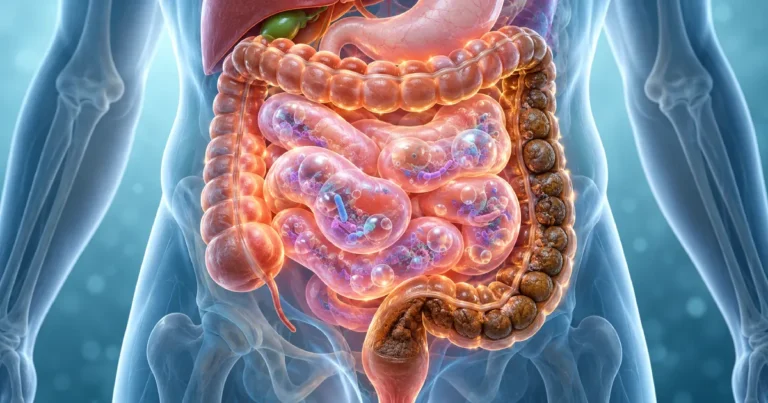
In contrast, SIBO is an organic, measurable condition characterized by a structural and microbial shift within the gastrointestinal tract. While your large intestine is designed to house trillions of microbes that ferment dietary fiber, your small intestine should remain relatively sterile. The small intestine’s primary role is to digest food and absorb nutrients, not to ferment matter.
Small intestinal bacterial overgrowth occurs when bacteria from the colon migrate upward into the small intestine, or when native small bowel bacteria multiply excessively. As outline in a landmark review published in Frontiers in Psychiatry, these bacteria—frequently species like Escherichia coli, Klebsiella, and Enterococcus—begin to feast on incoming carbohydrates before your body has a chance to absorb them.
This premature fermentation produces vast amounts of hydrogen, methane, or hydrogen sulfide gases. The resulting gas accumulation exerts massive physical pressure on the delicate, highly sensitive walls of the small intestine, triggering profound distension and metabolic downstream consequences.
2. IBS Pain vs SIBO Bloating: Analyzing the Primary Symptom Mechanics
While both conditions present a combined profile of pain and distension, analyzing the exact mechanics of IBS pain vs SIBO bloating reveals clear diagnostic clues. The physical location of the sensation, its timing, and its reaction to specific foods can help differentiate between the two.
The Mechanics of IBS Pain: Visceral Hypersensitivity and Motility
The defining feature of IBS is abdominal pain. This pain is not merely a byproduct of gas; it is rooted in a phenomenon known as visceral hypersensitivity. In people exhibiting irritable bowel syndrome symptoms, the nerve endings lining the large intestine are hyper-reactive.
A normal volume of gas or a standard digestive contraction that wouldn’t register in a healthy individual is perceived by an IBS patient’s brain as a sharp, distressing cramp. This sensory malfunction is compounded by erratic smooth muscle contractions:
- Hypermotility: The colon contracts too rapidly and aggressively, sweeping water and unabsorbed material through the tract, resulting in painful, urgent diarrhea.
- Hypomotility: The colon becomes sluggish, transit slows down, water is over-absorbed, and hard stool accumulates, creating a dull, heavy ache associated with constipation.
Because IBS pain is intimately tied to the evacuation of the large intestine, it often exhibits a direct relationship with bowel movements. Many patients experience a wave of intense cramping that builds right before a bowel movement and dissipates significantly once the stool is passed.
The Mechanics of SIBO Bloating: Fermentation and Intestinal Distension
While an IBS patient struggles with heightened pain perception, a SIBO patient struggles with a literal, physical volume problem. The hallmark of small intestinal bacterial overgrowth is severe, progressive bloating. This is not a subjective feeling of fullness; it is an objective, visible distension of the abdomen.
When you ingest carbohydrates—even healthy fibers, prebiotics, or complex starches—the overgrown bacteria in your small intestine ferment them within 15 to 90 minutes of eating. This rapid fermentation creates an immediate buildup of gases that have nowhere to go. The small intestine is a long, winding tube; when gas gets trapped in its upper portions, it causes the abdomen to swell outward.
Patients suffering from SIBO often describe the “pregnancy bloat” phenomenon. They may wake up with a perfectly flat stomach in the morning, but as they eat throughout the day, gas builds continuously. By the evening, their abdomen is visibly distended, tight, and firm to the touch, rendering their clothes uncomfortably tight.
3. Five Crucial Differences Between IBS Pain and SIBO Bloating
Distinguishing between IBS pain vs SIBO bloating requires evaluating five clinical markers. By looking closely at these distinct patterns, you can begin to pinpoint which condition is driving your primary distress.
Difference 1: The Timing of Symptoms Relative to Meals
The clock is an invaluable diagnostic tool when mapping IBS pain vs SIBO bloating. Because SIBO involves bacteria located high up in the digestive tract (the small intestine), symptoms manifest quickly after eating. When you consume a meal containing fermentable carbohydrates, those sugars reach the small bowel almost immediately. As a result, SIBO-driven bloating and upper abdominal pressure typically peak within 30 to 90 minutes after a meal.
IBS symptoms, conversely, operate on a delayed or systemic timeline. Because IBS primarily impacts the colon, food must travel the full length of the small intestine before it physically interacts with the large bowel—a journey that normally takes several hours.
When an IBS patient experiences pain immediately after eating, it is typically not due to fermentation, but rather an overactive gastrocolic reflex. This reflex is a normal mechanism where eating signals the colon to contract; in an IBS patient, this signal is exaggerated, causing instant lower abdominal cramping regardless of the specific food consumed.
Difference 2: The Physical Location and Characteristics of the Discomfort
Where does it hurt, and what does the swelling look like? The answers to these questions highlight the spatial differences between IBS pain vs SIBO bloating.
SIBO bloating typically concentrates in the mid-to-upper abdomen around the navel. The gas accumulation can stretch the small intestine so intensely that it refers pain upward, occasionally mimicking acid reflux, heartburn, or an intense pressure right below the ribcage. The abdomen often feels hard, drum-like, and continuously inflated.
IBS pain is characteristically localized to the lower abdomen, frequently tracking along the lower left or lower right quadrants where the descending and ascending sections of the colon reside. The pain is described as sharp, colicky, or spasmodic. While bloating can accompany IBS, the physical distension is usually less rigid and fluctuates depending on whether the individual has passed gas or had a bowel movement.
Difference 3: Paradoxical Responses to Fiber and Prebiotics
One of the clearest red flags pointing to small intestinal bacterial overgrowth over standard IBS is how your body reacts to “healthy” dietary interventions. In a standard functional gut case, increasing dietary fiber and consuming prebiotics (like inulin or chicory root) can help regulate bowel movements and support a healthy microbiome.
However, if you have SIBO, feeding fiber to your gut is equivalent to pouring gasoline on a fire. Because the small intestine is filled with hungry bacteria, a high-fiber meal, a large salad, or a prebiotic supplement provides an immediate, massive food supply for those microbes.
If eating a large bowl of broccoli, taking a fiber supplement, or consuming a probiotic makes your stomach instantly explode into severe bloating and pain, it is a classic sign of SIBO fermentation rather than a standard IBS pattern.
Difference 4: The Impact of Stress vs. Microbial Fermentation
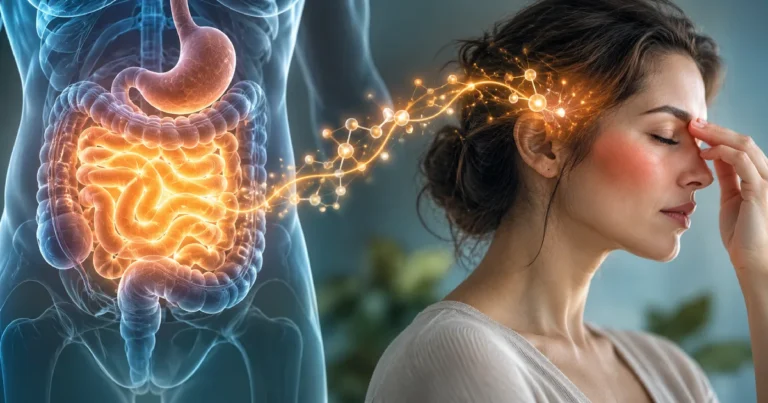
While the gut-brain axis influences all digestive health, the underlying triggers for IBS pain vs SIBO bloating diverge along different pathways. IBS is highly sensitive to psychological and emotional stress. The brain and the gut are connected via the vagus nerve; psychological stress triggers the release of corticotropin-releasing hormone (CRH), which directly alters colon motility and dramatically lowers your pain threshold, inducing visceral hypersensitivity.
SIBO symptoms are driven by a biochemical transaction: Microbial Fermentation + Carbohydrate Substrate = Gas Production. While stress can worsen SIBO over time by slowing down digestive motility, a SIBO flare is directly dependent on the presence of fermentable material in the small bowel. If you eat a meal completely devoid of carbohydrates (such as pure protein and fats), SIBO fermentation cannot occur, and the bloating will be minimal, regardless of your stress levels.
Difference 5: The Presence of Nutrient Malabsorption and Systemic Deficiencies
Because IBS is primarily a functional disorder of the large intestine, it rarely interferes with your body’s ability to absorb essential vitamins and minerals. The absorption of macronutrients and micronutrients is virtually complete by the time food exits the small intestine and enters the colon.
SIBO, however, directly compromises the mucosal lining of the small intestine where nutrient absorption takes place. The overgrown bacteria consume your nutrients before your body can get to them. In particular, SIBO bacteria have a high affinity for Vitamin B12, leading to systemic deficiencies.
Furthermore, as noted in clinical literature on Small Intestinal Bacterial Overgrowth and Irritable Bowel Syndrome, bacteria can deconjugate bile acids. This disrupts fat digestion and leads to the malabsorption of fat-soluble vitamins (Vitamins A, D, E, and K), which can cause unexplained fatigue, unintended weight changes, and long-term nutritional deficiencies that do not occur in standard IBS profiles.
4. The Scientific Overlap: How SIBO Drives IBS Symptoms
While it is helpful to look at IBS pain vs SIBO bloating as two distinct entities, we must recognize that they are deeply intertwined. In the medical community, SIBO is frequently identified as a major underlying cause of IBS.
The Prevalence of SIBO in IBS Patients
For decades, patients were told that their IBS was simply a permanent, untreatable condition they had to manage through lifestyle changes. However, clinical studies utilizing non-invasive breath testing have fundamentally shifted this paradigm.
Research demonstrates that between 60% and 80% of individuals diagnosed with IBS actually have underlying SIBO. A comprehensive meta-analysis hosted on the National Center for Biotechnology Information (NCBI) confirmed a highly significant association between the two conditions, demonstrating that IBS patients have a nearly five-fold increased risk of testing positive for SIBO compared to healthy controls.
When small intestinal bacterial overgrowth is present, it acts as the primary engine driving irritable bowel syndrome symptoms. The chronic production of gas does not just cause bloating; it physically distends the bowel wall. This constant stretching irritates the enteric nervous system, triggering the very visceral hypersensitivity that defines IBS pain.
Gas Subtypes and Bowel Phenotypes
The specific type of gas produced by the microbial overgrowth in the small intestine directly dictates the patient’s bowel habits, creating the distinct subcategories of IBS seen in clinical practice:
- Hydrogen-Dominant SIBO: Bacteria metabolize carbohydrates and produce hydrogen gas. High hydrogen levels are highly correlated with rapid intestinal transit, driving the diarrhea-predominant form of IBS (IBS-D).
- Methane-Dominant Overgrowth (Intestinal Methanogen Overgrowth – IMO): Archaeons (specifically Methanobrevibacter smithii) consume hydrogen and produce methane gas. As detailed in a study published in Microorganisms, methane acts as a direct neuromuscular inhibitor in the gut. It slows down peristalsis by up to 70%, leading to profound, treatment-resistant constipation, characteristic of IBS-C.
- Hydrogen Sulfide SIBO: This variant involves sulfate-reducing bacteria producing hydrogen sulfide gas. This gas is highly irritating to the gut lining, often causing severe abdominal pain, a distinct sulfur or “rotten egg” flatulence, and a presentation marked by hyper-urgency and inflammation.
5. Diagnostic Pathways: How to Test for IBS vs. SIBO
If you are caught in the crossfire of IBS pain vs SIBO bloating, you cannot guess your way to a cure. Because the symptoms present similarly, objective, scientific testing is required to determine whether your issues are functional or microbial.
Diagnosing IBS: A Diagnosis of Exclusion
There is no single blood test, scan, or imaging study that can definitively state, “You have IBS.” Instead, diagnosing IBS requires a dual approach: meeting the clinical Rome IV criteria and systematically ruling out other structural organic conditions.
When a patient presents with chronic abdominal pain and altered bowel habits, a gastroenterologist must screen for several “red flag” symptoms, including unexplained weight loss, rectal bleeding, nocturnal diarrhea, or a family history of colon cancer.
To safely confirm an IBS diagnosis, a medical provider will typically run a battery of tests to rule out other pathologies:
If all of these objective tests come back perfectly clear, yet the patient continues to experience chronic pain and irregular bowel habits, they are given the diagnosis of functional IBS.
Diagnosing SIBO: The Hydrogen and Methane Breath Test
Unlike IBS, SIBO can be directly identified through an objective, non-invasive diagnostic tool called the Lactulose or Glucose Breath Test. Because human cells are incapable of producing hydrogen or methane gas, any detection of these gases in your exhaled breath means that microbes are actively fermenting carbohydrates within your respiratory-digestive pathway.
The testing protocol follows a precise scientific methodology:
- Preparation: The patient follows a strict, 24-hour preparatory diet consisting only of easily digestible proteins and white rice, followed by a 12-hour fast to ensure baseline gas levels are as close to zero as possible.
- Baseline Measurement: The patient breathes into a specialized collection tube to establish a starting point for gas production.
- Substrate Ingestion: The patient drinks a solution containing a specific amount of sugar—usually lactulose (a synthetic sugar humans cannot absorb) or glucose.
- Serial Sampling: Over the next 2 to 3 hours, the patient provides a breath sample every 15 to 20 minutes.
As the sugar solution travels down the gastrointestinal tract, the breath analyzer tracks the exact parts per million (ppm) of hydrogen and methane gas over time.
According to the North American Consensus guidelines, a rise in hydrogen gas of ≥ 20 ppm from baseline within the first 90 minutes indicates a positive diagnosis for SIBO, confirming that bacteria are active in the small intestine. For methane, any reading of ≥ 10 ppm at any point during the test is diagnostic for Intestinal Methanogen Overgrowth.
6. Comprehensive Treatment Strategies for Gut Recovery
Once you have clarified the paradigm of IBS pain vs SIBO bloating via proper medical testing, you can implement a targeted, highly effective therapeutic protocol. Treating these conditions requires fundamentally different approaches to ensure long-term gut recovery.
Targeted Interventions for SIBO Eradication
Because SIBO is a localized bacterial overgrowth problem, the primary goal of treatment is to reduce the bacterial load in the small intestine and restore proper motility.
- Pharmaceutical Antibiotics: The gold-standard treatment for hydrogen-dominant SIBO is Rifaximin, a unique, non-absorbed antibiotic. Unlike systemic antibiotics, Rifaximin remains localized within the small intestine, targeting the overgrowth without disrupting the systemic microbiome. For methane-dominant overgrowth, Rifaximin is paired with Neomycin or Metronidazole to successfully eliminate the resilient archaea species.
- Herbal Antimicrobials: Clinical trials have demonstrated that targeted herbal protocols can be just as effective as pharmaceutical antibiotics. A combination of high-potency antimicrobials—such as emulsified oregano oil, berberine, and neem—is utilized over a 4-to-6-week cycle to break down bacterial cell walls and eradicate the overgrowth.
- Prokinetic Therapy: Eradicating the bacteria is only half the battle. SIBO typically occurs because the small intestine’s natural cleaning waves—known as the Migrating Motor Complex (MMC)—are impaired. To prevent immediate relapse, patients must utilize prokinetic agents (such as low-dose Naltrexone, Prucalopride, or ginger-based extracts) before bed to keep the small intestine clear of residual matter.
Holistic Management for Irritable Bowel Syndrome Symptoms
When managing functional irritable bowel syndrome symptoms where an active overgrowth is absent, the clinical focus shifts away from eradication and toward calming the enteric nervous system, regulating motility, and modulating gut microbiota dysbiosis.
- Neuromodulators: Because IBS pain is driven by visceral hypersensitivity and altered communication along the gut-brain axis, low-dose neuromodulators (such as tricyclic antidepressants or selective serotonin reuptake inhibitors) are frequently prescribed. At low doses, these medications do not target mood; instead, they calm the hyper-reactive nerve pathways lining the colon wall.
- Gut-Directed Hypnotherapy and CBT: Clinical studies show that psychological interventions can be highly effective for managing IBS pain. Gut-directed hypnotherapy rewires how the brain perceives sensory inputs from the colon, significantly reducing pain scores without pharmaceutical side effects.
- Smooth Muscle Antispasmodics: For immediate relief from acute cramping, smooth muscle relaxants like Peppermint Oil capsules or Hyoscyamine can be deployed to stop the spasmodic colon contractions that trigger intense pain.
Navigating the Dietary Landscape: Low FODMAP and Low Fermentation
Dietary modification plays a pivotal role in managing both conditions, but the application differs based on your underlying diagnosis. The most widely researched tool for these disorders is the Low FODMAP Diet, developed by Monash University. FODMAP is an acronym for Fermentable Oligosaccharides, Disaccharides, Monosaccharides, and Polyols—short-chain carbohydrates that are highly susceptible to microbial fermentation.
In a SIBO protocol, a strict Low FODMAP diet is utilized as a short-term therapeutic tool to starve the bacteria of their primary fuel source, drastically reducing gas production and providing immediate relief from severe abdominal distension. However, it should not be maintained long-term, as prolonged restriction can deplete the beneficial bacterial populations residing within your large intestine.
Once SIBO is successfully eradicated, patients transition to a less restrictive Low Fermentation Diet. This approach focuses less on eliminating specific vegetables and more on meal spacing—leaving 4 to 5 hours between meals without snacking—to allow the small intestine’s Migrating Motor Complex to function optimally without interruption.
For primary IBS patients, the Low FODMAP diet serves to lower the total gas volume throughout the entire tract. By minimizing overall gas production, the colon walls experience less physical stretching, keeping the patient’s visceral hypersensitivity below the threshold that triggers severe abdominal pain.
7. Conclusion: Empowering Your Journey to Lasting Gut Health
Navigating the complexities of chronic digestive distress can be a challenging journey, but understanding the key differences between IBS pain vs SIBO bloating provides the map you need to navigate toward true recovery. Do not settle for an unexamined diagnosis that leaves you trapped in a cycle of temporary fixes.
If your primary symptom is an intense, agonizing abdominal pain that changes with your bowel habits and flares during periods of high stress, your clinical focus should center on soothing the gut-brain axis and regulating colonic motility. If your life is dictated by an extreme, progressive abdominal distension that triggers a “pregnancy bloat” shortly after meals and reacts poorly to standard fiber supplements, it is time to look closely at a potential bacterial overgrowth.
Talk to a gastroenterologist or a specialized functional medicine practitioner about getting a hydrogen and methane breath test. Armed with objective data, targeted therapeutic protocols, and a clear understanding of your unique physiology, you can move past general diagnoses, eliminate your symptoms at their source, and rebuild your digestive vitality from the inside out.
Verifiable Scientific References & Citations
- The Rome IV Criteria for Disorders of Gut-Brain Interaction: Schmulson, M. J., & Drossman, D. A. (2017). What Is New in Rome IV. Journal of Neurogastroenterology and Motility, 23(2), 151–163. National Center for Biotechnology Information (NCBI).
- SIBO Prevalence in IBS and Pathophysiological Link: Takakura, W., & Pimentel, M. (2020). Small Intestinal Bacterial Overgrowth and Irritable Bowel Syndrome – An Update. Frontiers in Psychiatry, 11, 664. Frontiers in Psychiatry.
- Meta-Analysis of SIBO Association with Irritable Bowel Syndrome: Graph, M., et al. (2014). Irritable Bowel Syndrome and Small Intestinal Bacterial Overgrowth: A Systematic Review and Meta-Analysis. World Journal of Gastroenterology, 20(13), 3678–3688. National Center for Biotechnology Information (NCBI).
- The North American Consensus on Breath Testing: Rezaie, A., et al. (2017). Hydrogen and Methane-Based Breath Testing in Gastrointestinal Disorders: The North American Consensus. The American Journal of Gastroenterology, 112(5), 775–784. PubMed (National Institutes of Health).
- Gut Microbiota, Gas Subtypes, and Non-Invasive Diagnostics: Ghoshal, U. C., et al. (2023). IBS and SIBO: Gut Microbiota, Pathophysiology, and Non-Invasive Diagnostics. Microorganisms, 11(3), 251. MDPI – Microorganisms Journal.
Tired of guessing what’s behind your gut issues?
Support your gut from the comfort of home. Schedule your free consultation and let’s explore what’s really going on — together, we’ll map out a personalized path forward.
Disclaimer: The information provided in this article is for educational and informational purposes only and is not intended as medical advice, diagnosis, or treatment. I am a Functional Digestive Health Strategist, not a licensed physician or licensed healthcare practitioner, and nothing on this site establishes a doctor-patient relationship. The strategies, insights, and suggestions shared here are designed to support your overall wellness goals and should not replace a consultation with a qualified healthcare provider. Results and experiences discussed are individual and not guaranteed. Always consult your doctor or primary care professional before making any changes to your diet, supplements, exercise routine, or lifestyle, especially if you have an underlying medical condition or are experiencing severe symptoms. This content is not a substitute for emergency care — if you are experiencing a medical emergency, call 911 or go to your nearest emergency room.