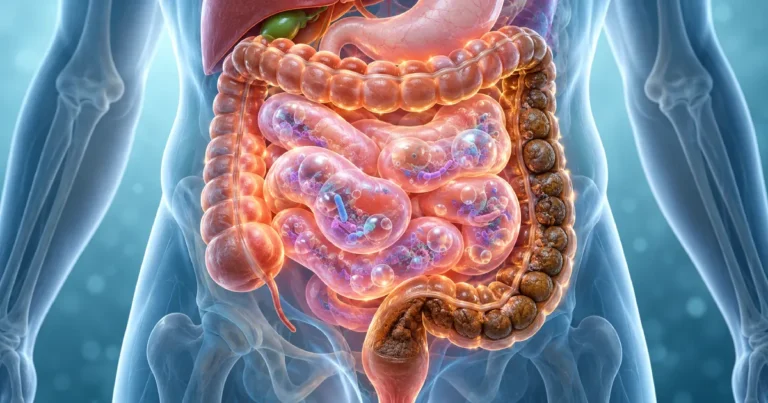

Bloating After Every Meal: 5 Shocking Reasons You Are Frustrated
You finish your last bite of lunch, and within thirty minutes, it happens again. Your pants tighten, your stomach expands like a balloon, and an uncomfortable, heavy pressure takes over your entire torso. If you find yourself dealing with bloating after every meal, you are intimately familiar with this exhausting cycle. You might feel like you look six months pregnant by 4:00 PM, or you might find yourself changing into elastic-waistband sweatpants just to get through an evening at home.
The most isolating part of experiencing bloating after every meal is the lack of clear answers. You visit your primary care physician or a conventional gastroenterology specialist, hoping for a definitive diagnosis. They run a standard blood panel, schedule an upper endoscopy, or perform a routine colonoscopy. Weeks later, the results come back pristine. Your doctor smiles, hands you a pamphlet on generic Irritable Bowel Syndrome (IBS), and tells you that your digestive tract looks entirely normal.
But living with bloating after every meal is anything but normal. When standard medical imaging and lab work fail to find a structural disease, it does not mean your symptoms are imaginary. It simply means the issue isn’t structural—it is functional. Your organs are physically intact, but the underlying biochemical processes, microbial balances, and motility patterns that govern your digestive system are deeply disrupted.
To resolve bloating after every meal, we must look beyond the surface level of masking symptoms with over-the-counter antacids or gas drops. We need to investigate the complex, overlapping root causes that convert healthy, nourishing food into painful, trapping gas.
Let us dive deep into the five shocking functional reasons behind your bloating after every meal, explore the clinical science validating these mechanisms, and outline a strategic roadmap to restore your digestive wellness.
1. Small Intestinal Bacterial Overgrowth Symptoms and Fermentation
The human gastrointestinal tract houses trillions of microorganisms, the vast majority of which should reside securely inside your large intestine (colon). Here, these microbes perform vital tasks, such as fermenting indigestible fibers, synthesizing vitamins, and training your systemic immune response. However, when these microbes migrate backward or proliferate upward into the small intestine, it triggers a condition known as Small Intestinal Bacterial Overgrowth (SIBO).
When you look closely at small intestinal bacterial overgrowth symptoms, the hallmark sign is rapid-onset, severe abdominal distension shortly after eating. The small intestine is anatomically designed to absorb macronutrients, vitamins, and minerals. It is relatively long, narrow, and not built to expand or accommodate large volumes of metabolic gas.
When structural or functional disruptions allow massive populations of bacteria to take up residence in this delicate zone, they get first access to the food you swallow. As carbohydrates, starches, and soluble fibers pass through, these displaced bacteria eagerly consume them, initiating a rapid process of cellular fermentation.
This premature fermentation releases massive amounts of hydrogen and methane gases directly into the narrow tracks of your small intestine. Because the small intestine cannot easily release or transport these pockets of gas down to the colon, the gas becomes physically trapped. The result is the sudden, painful expansion that leaves you always bloated after eating.
A landmark study by Lin, H. C. (2004) in The American Journal of Gastroenterology demonstrates that a substantial percentage of individuals clinically diagnosed with generalized IBS actually test positive for SIBO via non-invasive breath testing. When you are dealing with SIBO, eating even the healthiest foods—such as apples, garlic, onions, broccoli, or avocados—can paradoxically make your bloating after every meal significantly worse. These nutrient-dense foods are packed with fermentable carbohydrates (FODMAPs) that serve as fuel for the misplaced bacterial colony, triggering near-instant gas production.
2. Chronic Abdominal Distension Driven by Intestinal Methanogen Overgrowth
While hydrogen gas production is a major contributor to upper abdominal pressure, a highly specialized group of ancient microbes called archaea can trigger a uniquely stubborn form of chronic abdominal distension. When these organisms colonize the digestive tract, the condition is classified as Intestinal Methanogen Overgrowth (IMO), which can occur in both the small and large intestines.
Unlike standard bacteria, methanogens do not feed directly on your food scraps. Instead, they consume the byproduct gases produced by other ambient bacteria. Specifically, methanogens take four molecules of hydrogen gas and one molecule of carbon dioxide to synthesize a single molecule of methane gas (4H₂ + CO₂ → CH₄).
This structural dynamic creates a distinct clinical picture. Methane gas acts as a localized paralytic agent within the neuromuscular linings of the gut wall. Clinical research compiled by Pimentel, M., Lin, H. C., Enayati, P., et al. (2003) in Neurogastroenterology & Motility shows a direct, linear correlation between the volume of methane gas detected on a breath test and the physical slowing of intestinal transit times.
As methane gas paralyzes intestinal smooth muscle, your waves of muscular contraction—known as peristalsis—grind to a halt. This leads to chronic, stubborn constipation.
When your intestinal transit slows down dramatically, stool stalls inside the colon, and waste material pools in the small intestine. This stagnant environment allows bacteria more time to ferment lingering food remnants, building an inescapable feedback loop. The resulting gas cannot escape downward due to the physical backup of stool, forcing the abdomen to stretch outward. If you find that your abdomen remains distended, hard, and uncomfortable from the moment you wake up until you go to bed, IMO and methane gas are highly probable drivers of your bloating after every meal.
3. Low Stomach Acid, Poor Enzyme Output, and Upstream Digestive Failures
Digestion is a strictly orchestrated, top-down cascade. What happens in the lower segments of your gut is completely dependent on how well the upper segments perform their duties. When you experience bloating after every meal, the true failure often tracks back to the very first stops on the digestive assembly line: the stomach and the pancreas.
To break down dense proteins, activate crucial proteolytic enzymes, and sterilize your food against incoming environmental pathogens, your stomach must maintain an intensely acidic environment, ideally hovering at a pH between 1.5 and 2.5. This highly acidic bath is generated by your stomach’s parietal cells pumping out hydrochloric acid (HCl).
Unfortunately, chronic stress, poor nutritional zinc status, age, and the widespread use of over-the-counter acid-suppressing medications (like proton pump inhibitors or H2 blockers) can cause stomach acid levels to drop.
When you lack sufficient stomach acid, your food enters the small intestine as an unrefined, chunky slurry rather than a smoothly liquefied substance. Furthermore, the acidic pH of stomach contents is the primary chemical trigger that prompts your pancreas to release digestive enzymes (such as lipase, amylase, and protease) and signals your gallbladder to contract and squirt out bile.
Without that sharp drop in pH, enzyme output remains dangerously low. This lack of enzymes leaves large, intact macromolecules of protein, fat, and carbohydrates sitting stagnant in your small intestine.
Human digestive cells cannot absorb un-split food molecules. However, the bacteria residing throughout your gut have no problem consuming them. The presence of un-cleaved nutrients sets off accelerated microbial breakdown, ensuring you feel always bloated after eating regardless of how clean or simple your ingredients are.
4. The Vagus Nerve, Stress Physiology, and Gut-Brain Motility Failures
The gut and the brain are continuously tethered together by a bidirectional communication superhighway known as the gut-brain axis. The primary conductor of this complex system is the Vagus Nerve, a thick cranial nerve that originates in the brainstem and wanders down to innervate the heart, lungs, and the entirety of the digestive tract.
The vagus nerve is responsible for activating your parasympathetic nervous system, commonly referred to as the “rest and digest” state. When your vagus nerve fires effectively, it stimulates the production of saliva, triggers the release of hydrochloric acid, and coordinates the rhythmic, cleansing muscular waves of the intestines, known as the Migrating Motor Complex (MMC).
The MMC acts as an internal broom during periods of fasting, sweeping lingering food crumbs, dead cellular debris, and stray bacteria out of the small intestine and safely down into the colon.
When you live in a state of chronic, unmitigated sympathetic nervous system activation—driven by work deadlines, financial pressures, poor sleep, or unresolved emotional trauma—your brain perceives a continuous ambient threat. Under stress, the body diverts blood flow away from your core organs and out to your skeletal muscles, preparing you to run or fight.
As a result, vagal nerve tone drops, and the internal broom of the MMC is paralyzed. Without these regular sweeping waves, bacteria stay trapped inside the small intestine, multiplying rapidly and feeding continuously on lingering food particles.
A data review compiled by Bonaz, B., Bazin, T., & Pellissier, S. (2018) in Frontiers in Neuroscience confirms that stress-induced vagal inhibition alters the physical permeability of the gut lining and impairs baseline intestinal motility. When your motility stalls, the physical gases produced by normal daily digestion cannot move smoothly through your plumbing. Instead, they pool in static pockets, stretching the sensitive nerve endings of your gut wall and generating the sensation of bloating after every meal.
5. Food Sensitivities, Histamine Intolerance, and Intestinal Permeability
When the structural integrity of your gut barrier is compromised—a clinical phenomenon widely known as increased intestinal permeability or “leaky gut”—your immune system goes on high alert. The lining of your small intestine is a single layer of epithelial cells knit together by intricate proteins called tight junctions. This microscopic barrier serves a dual purpose: it allows completely broken-down nutrients to pass safely into the bloodstream while keeping undigested food particles, toxins, and microbes contained inside the gut.
When chronic low-grade inflammation, hidden gut infections, or dietary triggers like refined emulsifiers damage these tight junctions, small gaps open up. This allows microscopic, unrefined food proteins to slip through the gut wall and interface directly with the immune cells that monitor the sub-epithelial space. Your immune system views these harmless food proteins as dangerous foreign invaders, launching an inflammatory response that alters blood flow, induces local tissue swelling, and triggers structural changes that leave you always bloated after eating.
This immune activation frequently manifests as food sensitivities and histamine intolerance. When food sensitivities run rampant, eating triggers your mast cells—a specialized class of frontline white blood cells—to break open and release a flood of inflammatory mediators, including histamine.
As highlighted by Maintz, L., & Novak, N. (2007) in The American Journal of Clinical Nutrition, when an excess of histamine accumulates in the digestive tract due to a lack of clearing enzymes (like Diamine Oxidase, or DAO), it causes local smooth muscle spasms, blood vessel dilation, and rapid fluid retention inside the bowel wall. This rapid shift of fluid and local inflammation create a profound sense of heavy, fluid-like chronic abdominal distension that mimics gas bloating but is actually driven by a localized immune flare-up.
Strategic Interventions: How to Stop Food Fermentation in Gut Dynamics
Living with a stomach that reacts poorly to everything you swallow is frustrating, but you do not have to accept chronic discomfort as a permanent baseline. By transitioning your approach from temporary symptom suppression to an organized, root-cause functional health framework, you can systematically address these hidden drivers and learn how to stop food fermentation in gut pathways for good.
Step 1: Utilize Targeted Biomarker Diagnostics
To fix a complex digestive issue, you must first define exactly what is happening beneath the surface. Guessing with random supplements or cycling through restrictive diets often leads to frustration and nutritional deficiencies.
Step 2: Implement the 5R Functional Gastrointestinal Framework
Once your functional lab testing highlights your specific physiological blind spots, you can apply the clinically validated 5R Framework to methodically rebuild your digestive capacity.
Moving Beyond the Bloat: Embracing a Root-Cause Solution
Experiencing bloating after every meal is a clear signal from your body that an underlying functional mechanism has drifted off course. Whether your symptoms are driven by the premature gas production of SIBO, the paralyzing transit delays of methane-producing archaea, low upstream enzyme activity, stress-induced vagal suppression, or local mast cell activation, the path out of chronic discomfort requires looking at the whole body.
You do not have to spend your life avoiding social gatherings, fearing your favorite meals, or collecting normal test results that don’t match how you actually feel. By looking at your history through a functional lens, utilizing advanced diagnostic testing, and committing to a highly individualized health strategy, you can get to the root of your symptoms.
True digestive wellness is not about permanently restricting your diet down to a few safe options; it is about restoring your body’s innate capacity to break down, absorb, and thrive on a wide variety of nourishing foods. Take a deep breath, look beyond generic labels, and start taking your first steps toward a clearer, more comfortable path forward.
Verifiable Scientific References & Citations
- Lin, H. C. (2004). Small Intestinal Bacterial Overgrowth: A Framework for Understanding Irritable Bowel Syndrome. The American Journal of Gastroenterology, 99(9), 1797-1804. doi.org
- Pimentel, M., Lin, H. C., Enayati, P., et al. (2003). Methane, a gas produced by enteric microbes, slows intestinal transit and associates with constipation. Neurogastroenterology & Motility, 15(3), 267-275. doi.org
- Bonaz, B., Bazin, T., & Pellissier, S. (2018). The Vagus Nerve at the Interface of the Microbiota-Gut-Brain Axis. Frontiers in Neuroscience, 12, 49. doi.org
- Maintz, L., & Novak, N. (2007). Histamine and histamine intolerance. The American Journal of Clinical Nutrition, 85(5), 1185-1196. doi.org
Tired of guessing what’s behind your gut issues?
Support your gut from the comfort of home. Schedule your free consultation and let’s explore what’s really going on — together, we’ll map out a personalized path forward.
Disclaimer: The information provided in this article is for educational and informational purposes only and is not intended as medical advice, diagnosis, or treatment. I am a Functional Digestive Health Strategist, not a licensed physician or licensed healthcare practitioner, and nothing on this site establishes a doctor-patient relationship. The strategies, insights, and suggestions shared here are designed to support your overall wellness goals and should not replace a consultation with a qualified healthcare provider. Results and experiences discussed are individual and not guaranteed. Always consult your doctor or primary care professional before making any changes to your diet, supplements, exercise routine, or lifestyle, especially if you have an underlying medical condition or are experiencing severe symptoms. This content is not a substitute for emergency care — if you are experiencing a medical emergency, call 911 or go to your nearest emergency room.